
What Awe Does to Your Child’s Brain
Your 10-year-old stands at the cave entrance. They go quiet. Eyes wide. Taking it all in.
Or they reach the top of the climbing wall for the first time. Look down. Realize what they just did.
Or they’re on the water, paddle in hand, and the landscape opens up in a way screens never could.
That feeling? That’s awe.
And it’s doing something specific to their brain.
Awe Isn’t Just a Nice Experience
Dacher Keltner, UC Berkeley psychology professor and founding director of the Greater Good Science Center, has spent 20 years researching awe. His findings: awe transforms how our brains and bodies function.
Not metaphorically. Measurably.
It is awe that sharpens our reasoning and orients us toward big ideas and new insights, that cools our immune system’s inflammation response and strengthens our bodies.
Dacher Keltner, UC Berkeley psychology professor and founding director of the Greater Good Science Center
But here’s what matters for your 4th or 5th grader: awe wakes them up.
What Awe Actually Is
Awe happens when we encounter something vast that transcends our current understanding of the world.
For kids, that could be:
- Standing inside a cave system millions of years old
- Reaching the top of a climbing wall they thought was impossible
- Seeing a landscape from a chairlift for the first time
- Watching water move around their paddle
- Looking up at trees from a zipline
Research shows awe experiences share two elements: perceived vastness and a need for mental accommodation. Your brain has to adjust to process what you’re experiencing.
That adjustment? That’s growth.
What Happens in the Brain
Kids naturally gravitate toward nature. They explore it. Experiment with it. Want to be in it. Keltner notes this is fundamental to human development, part of how children unfold neurologically.
When kids experience awe:
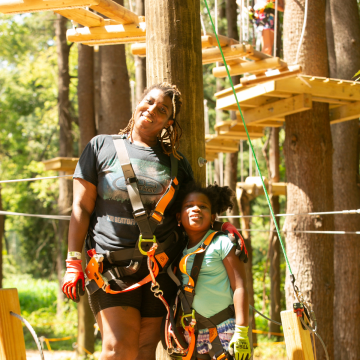
Attention sharpens. Awe activates focus in ways entertainment never does. Your child isn’t passively consuming. They’re fully present.
Stress decreases. Research documents reduced inflammation and lower cortisol following awe experiences. Sound waves from moving water activate the vagus nerve, calming the nervous system.
Creativity increases. Awe opens the mind to new patterns and possibilities. It encourages taking in new information and adjusting mental structures around it.
Connection strengthens. According to the John Templeton Foundation’s review of awe research, awe activates our inclination to share experiences and create networks with others.
The Screen Comparison
Screens deliver stimulation. Dopamine hits. Instant gratification.
Awe delivers transformation. Wonder. A sense that the world is bigger than what fits on a device.
One builds passive consumption. The other builds active engagement with mystery.
Your child can watch a video about caves. Or they can stand inside one. The neural experience is completely different.
Frequently Asked Questions
Can kids really experience awe the same way adults do?
Yes. Research shows children naturally gravitate toward awe-inspiring experiences in nature. They’re often more open to awe than adults who’ve become habituated to wonder.
Does awe have to be a “big” experience?
No. Keltner’s research found that everyday experiences can produce awe. The key is openness to vastness and mystery, not the size of the mountain you’re standing on.
Can you teach a child to experience awe?
You can’t force it, but you can create conditions for it. Exposure to new environments. Slowing down. Asking questions instead of providing answers. Letting them discover.
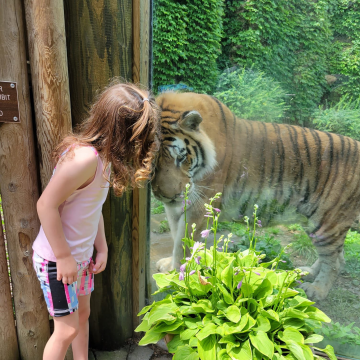
What if my child isn’t naturally “outdoorsy”?
Awe isn’t about being outdoorsy. It’s about encountering something vast. Some kids find it climbing. Others find it underground in caves. Others on water. The pass provides variety.
How does awe differ from just being excited?
Excitement is high energy. Awe is quiet wonder. When your child goes still and wide-eyed, processing something bigger than themselves—that’s awe.
Why This Matters at Ages 9-11
This developmental window is when identity forms. When habits stick. When your child decides who they are.
If their brain associates outdoor experiences with awe, with wonder, with the feeling of encountering something vast—that becomes part of their identity.
Years later, when life gets hard or busy, they’ll remember: I’m someone who seeks out experiences that make me feel alive.
That’s not about making them “outdoorsy.” It’s about showing them there’s more to experience than what fits on a screen.
What This Looks Like Practically
The PA Outdoor Adventure Pass gives your child access to awe-producing experiences across Pennsylvania. Caves. Climbing walls. Ski mountains. Ziplines through trees. Water that moves around them.
Each experience is an opportunity for their brain to encounter vastness. To process something bigger than what they already know. To grow.
One year of exposure. Multiple moments of awe. A different neural pattern established.
What your child experiences at 10 shapes what they seek at 30.